Side A · Liner notes
Playoff Bound: Brewers and Rays Challenge MLB's Economic Narrative
Basketball · Words by Eric Fisher · Released
The Brewers and Rays clinched playoff spots, complicating the labor struggle between MLB and its players, while highlighting the competitiveness of smaller markets.
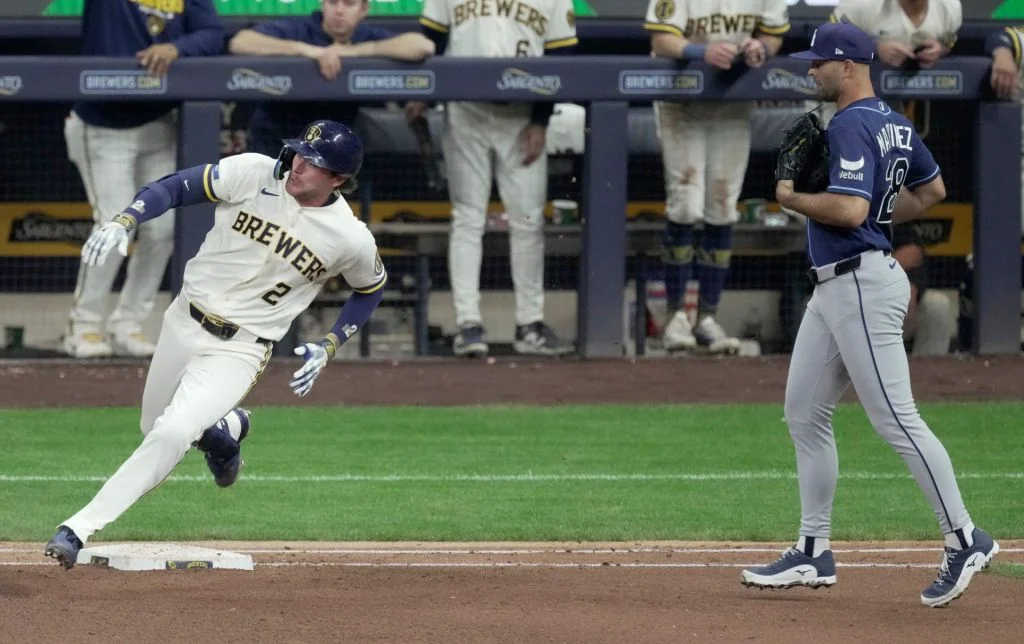
The Milwaukee Brewers and Tampa Bay Rays have become the first teams to clinch spots in the 2026 postseason, sending a strong message amidst ongoing labor tensions between Major League Baseball (MLB) and the Players Association. Both teams, often relegated to the economic periphery of the league, showcase the unexpected outcomes in this season, complicating the narrative of financial disparity in baseball.
The Brewers, operating in MLB's smallest media market, achieved the league's best record, cementing their position as a dominant force throughout 2026. This achievement is particularly remarkable given their payroll ranks just 19th in the league at $153.6 million. Milwaukee’s success underscores the effectiveness of their management strategies, which have allowed them to defy conventional expectations in a revenue-driven sport.
On the other hand, the Rays, returning to the postseason for the first time since 2023, exemplify resilience in the face of significant market challenges. With the fourth-smallest payroll in the league at $114.1 million, Tampa Bay has consistently overperformed this season, despite a preseason outlook that had them finishing below .500. Notably, Tampa Bay’s management had a shared belief that their team's competitiveness was underappreciated relative to their counterparts in the loaded American League East. “We did have a genuine belief that this team was a lot tighter with the other four [AL East] teams than certainly the public had it,” asserted Rays president of baseball operations Erik Neander. “No matter what happens from here, they’ve proven that to be correct.”
Innovative Adaptation Amidst Challenges
This season saw both the Brewers and Rays navigating substantial financial hurdles, particularly after losing their traditional regional media rights agreements when the Main Street Sports Group disbanded last offseason. Both franchises have had to adjust by collaborating with MLB’s in-house local media department for game distribution and production. Despite these shifting revenue landscapes, both teams have managed to thrive, emerging as sustained playoff contenders. The only months where either team posted losing records this season were the Brewers’ 12-13 showing in April and the Rays’ 2-3 start in March.
Shifting Labor Dynamics
The playoff success of these smaller market teams intensifies the ongoing labor disputes between MLB and its players’ union, especially regarding competitive balance and payroll disparities. The emergence of the Brewers and Rays lends weight to the union's argument against the proposed hard salary cap. The MLB Players Association (MLBPA) contends that such a cap would inhibit player salaries without addressing the perceived problems of competitive imbalance. MLBPA interim executive director Bruce Meyer emphasized, “We do not accept the premise that there’s some sort of existential crisis going on.”
Conversely, owners argue that economic disparities must be acknowledged, particularly when it comes to playoff advancement. With over 80% of League Championship Series participants and 85% of World Series teams over the past decade hailing from larger markets, the question of whether small-market teams can consistently compete at the highest level lingers. As it stands, neither the Brewers nor the Rays has ever captured a World Series title, with the last small-market champion being the Kansas City Royals in 2015.
The Road Ahead
Commissioner Rob Manfred has articulated that achieving competitive balance “goes to the core of what we’re about.” He argues that asking fans to believe that low payroll teams have the same opportunity to win as their wealthier counterparts strains credibility. Considering the playoff performance of the Brewers and Rays, the ongoing debates around economic fairness in baseball are likely to evolve as these clubs vie for postseason success.
As they prepare for their playoff journeys, both the Brewers and Rays not only serve as aspirational stories of small-market resilience but also as critical elements in the larger dialogue surrounding labor relations in baseball. The outcomes of their postseason runs might set the stage for significant changes in the landscape of player negotiations and team management in the future. What comes next could reshape perceptions around competitive feasibility in MLB, making the upcoming playoffs a pivotal moment in the league’s history.
The post Brewers and Rays Make Playoffs, Complicating MLB-Union Labor Fight appeared first on Front Office Sports.


