Side A · Liner notes
Diamond Baseball Holdings Aims for Dominance in Minor League Baseball Landscape
Football · Words by Eric Fisher · Released
Diamond Baseball Holdings seeks to redefine Minor League Baseball with efficient operations and an ambitious growth strategy, showing interest in all affiliated teams.
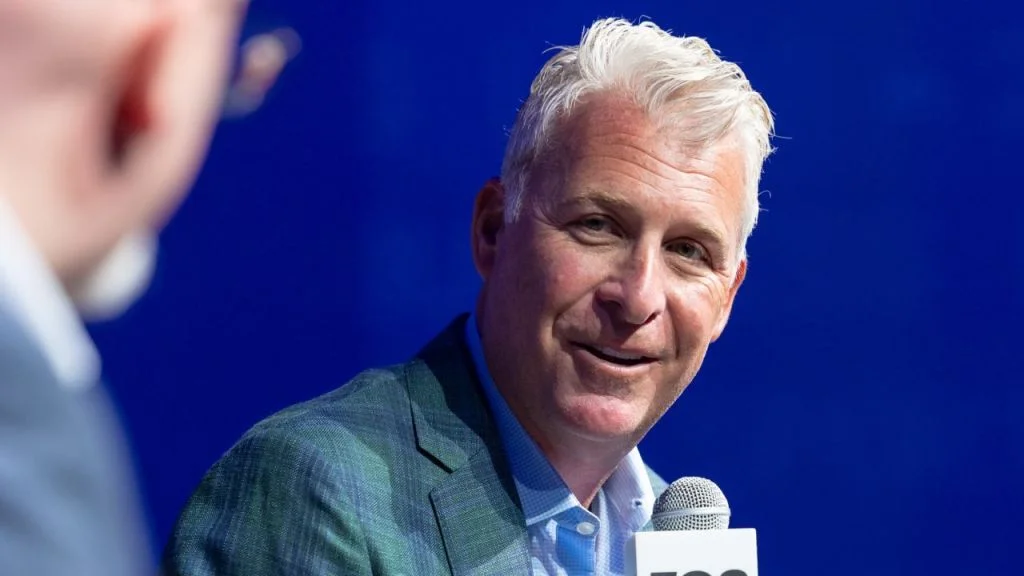
Diamond Baseball Holdings (DBH) is reshaping the Minor League Baseball (MiLB) landscape with bold ambitions and a clear strategy to enhance operational efficiency. During a recent appearance at the Front Office Sports Asset Class event in New York, CEO Peter Freund detailed how the company plans to leverage its burgeoning portfolio to create tangible changes in the league.
Following Major League Baseball’s (MLB) decision to loosen ownership restrictions after the 2021 MiLB reorganization, DBH has made impressive strides, acquiring 49 of the 120 affiliated minor league teams within a remarkably short span. This focused acquisition strategy has allowed DBH to include high-performing franchises such as the High-A Dayton Dragons, known for their unmatched sellout streak, and the Triple-A Charlotte Knights, which have drawn significant attention for their attendance figures.
Rewriting the Rule Book
Freund emphasized that DBH's approach allows for a revised operational model within MiLB, departing from the traditional "mom-and-pop" ownership structure. By integrating best practices from the business world into their operations, DBH is set to maximize the potential of these teams. Freund noted, “We’ve had an opportunity to sort of rewrite the rule book and bring best practices and scale to Minor League Baseball.” This kind of operational overhaul could lead to a more sustainable and profitable model, offering a stark contrast to the predominantly independent owners of the past.
While Freund did not specify a target for the total number of teams DBH aims to own, he was clear that their current scale has already ushered in operational improvements. This scarcity coupled with increasing interest creates a compelling business opportunity for potential investors and stakeholders in the sports sector.
Expansion Beyond Baseball
In terms of looking ahead, DBH intends to expand its influence beyond just team ownership, with plans to engage in significant real estate developments around ballparks. This strategic pivot aims to capitalize on the success of model developments like The Battery in Atlanta, known for its vibrant mix of entertainment, dining, and retail that operates year-round.
Freund is optimistic about this dual strategy, stating, “The opportunity to activate these ballparks 365 days a year is a huge part of our thesis.” This year-round activation of ballparks could provide stable revenue streams and enhance fan engagement, critical factors for the long-term health of any franchise.
Implications for Minor League Teams and Operations
The aggressive growth and restructuring being pursued by DBH not only promise better financial results for the teams involved but also potential ripple effects across the entire MiLB ecosystem. Economically, more efficient operations can lead to improved player development conditions, better facilities, and investments in local communities. As DBH streamlines operations and introduces a standardized model rooted in professional sports business practices, one can expect an evolution in how teams engage with their markets.
A shift towards a cohesive network of affiliated teams managed under a single operational umbrella could also lead to uniform marketing strategies, more sophisticated fan engagement initiatives, and shared resources that sharpen the competitive edge across franchises. This might make it easier for teams, especially those with historical struggles, to maintain sustainable operations in increasingly competitive environments.
The Growing Appeal of Minor League Baseball
The focus on enhancing both the operational framework and fan experience comes at a time when Minor League Baseball is seeing a refreshed wave of interest. With younger fans drawn to the affordability and accessibility of MiLB games, the potential for growth is vast. Teams that can effectively engage local audiences—with promotions, community events, and enhanced game-day experiences—stand to benefit from this spike in enthusiasm.
As DBH continues to look for any and all affiliated teams, the implications are wide-ranging for both current owners and potential investors. The evolution of MiLB under the stewardship of firms like Diamond Baseball Holdings suggests a transformative phase ahead, offering new dynamics in market strategy and financial viability.
With a keen eye on both the present and future, DBH’s calculated moves could very well set a precedent for how Minor League Baseball will operate in the years to come, potentially revolutionizing the way fans connect with the game.
The post Diamond Baseball Holdings Interested in ‘Any and All’ Minor League Teams appeared first on Front Office Sports.


