Side A · Liner notes
Internal Strife Threatens the Women’s Professional Baseball League’s Future
Baseball · Words by Margaret Fleming · Released
The Women's Professional Baseball League faces serious turmoil marked by financial disputes and governance issues, putting its promising start at risk.

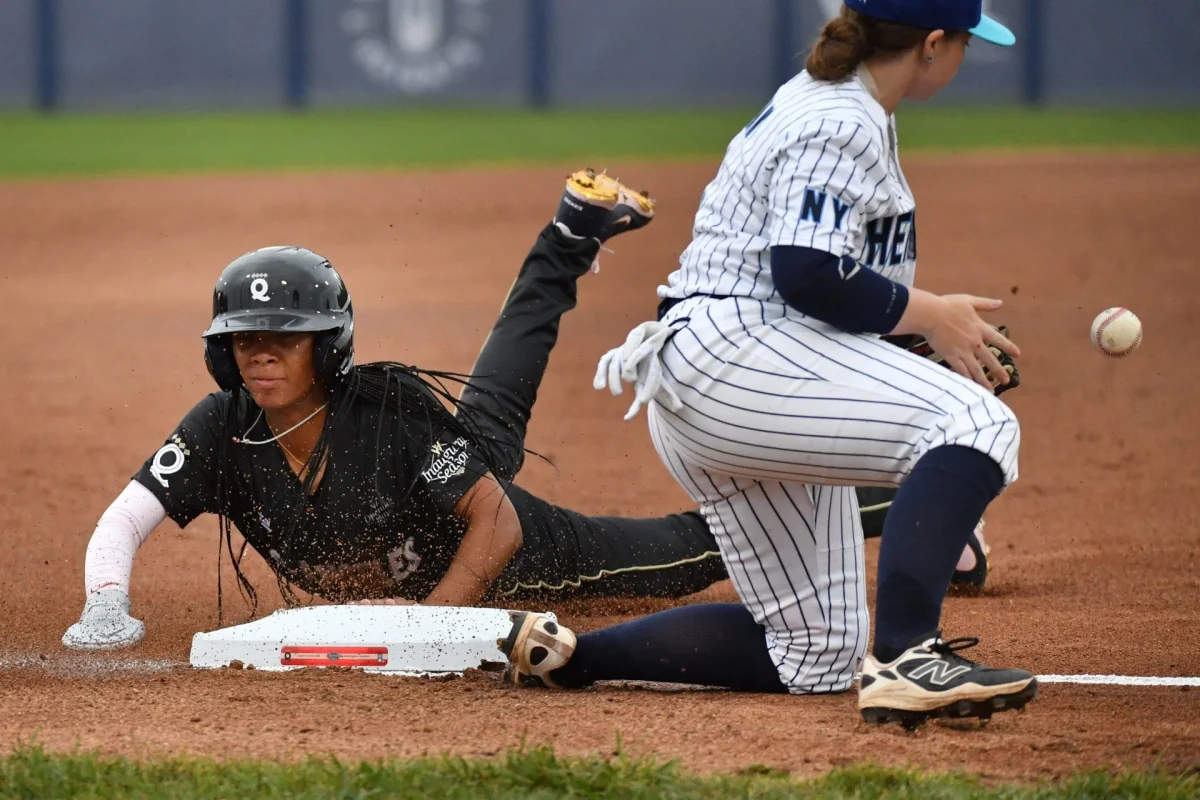
Women’s professional baseball has finally returned to the U.S. landscape as of August 2025, marked by the exciting launch of the four-team Women’s Professional Baseball League (WPBL). This event is especially monumental given that the last semblance of a professional league for women was in the 1950s, aside from a brief revival influenced by the movie A League of Their Own in the 1990s. However, beneath the celebratory exterior lies a storm of internal conflict, with ongoing litigation, boardroom tensions, and serious doubts regarding the financial investments underpinning the league.

Keith Stein, CEO of the WPBL and a Canadian lawyer, acknowledges that a "power struggle" exists within the organization. Recent months have seen board member Mina Kim mobilizing legal action against the league, seeking financial transparency and alleging that Stein may have mismanaged funds amid what her lawyer describes as "mounting red flags." As these disputes unfold in the Delaware Court of Chancery, the integrity of the league's governance and its future stability hang in the balance.
The Ownership Discrepancy
At the core of the WPBL’s struggles is a questioning of Stein’s financial commitment to the league. He reportedly owns approximately 65% of the league, while Kim, a significant investor, claims to have seen “no evidence” that Stein has actually contributed funds to support the WPBL’s operations. Stein asserts that he initially invested around $225,000 to establish the league, a claim disputed by Kim, who insists that proper documentation of his investments is absent.
This discrepancy is critical when considering the league’s financial health and governance. Kim, having invested $500,000 herself, is understandably frustrated at the lack of transparency. She states, “Investors have asked directly for that information, and to date, none has been provided,” highlighting a concerning culture of ambiguity.
Mixed Messages and Fund Allocation
The WPBL was officially announced in October 2024, co-founded by Stein and Justine Siegal, a notable advocate for women's baseball. Throughout the subsequent months, the league managed to raise about $3 million in a seed funding round, primarily through Kim's investment. There seems to have been a prevailing belief among those close to the league that Stein had contributed a significant amount during the initial phases. Yet, evidence supporting this investment is lacking, leading to confusion and discontent among stakeholders.
During a board meeting on June 10, Stein purportedly stated he had no obligation to disclose financial details to the board—a remark further aggravating Kim's concerns. Stein has defended his funding approach, indicating that his initial expenses predated the establishment of the league’s formal bank account and were often channeled through personal means—including employee salaries. Such practices raise significant questions about the transparency necessary for a startup, especially one with ambitions to promote women's professional baseball.
Financial Transactions Under Scrutiny
Kim's legal filing highlights various “unexplained” transfers, including a particularly controversial $59,000 wire from the league that remains shrouded in confusion. Initially referred to as a reimbursement for Stein, it has since been reclassified as a loan without supporting documentation. Stein countered that these funds derived from a portion of Eiffe’s investment and were used for operational costs, including insurance for tryouts in Washington, D.C. This disconnect between claim and financial tracking illustrates the broader issues facing WPBL’s governance structure.
Moreover, Kim’s allegations detail that the league’s headquarters is linked closely to Stein’s personal interests. The address of a Dentons office, where Stein is employed, doubles as the league’s registered address. Even more revealing is the presence of individuals connected to Stein’s law firm on the WPBL’s board, raising potential conflicts of interest. Such intricate ties to Stein’s professional world raise questions about the objectivity of leadership and decision-making within the league.
Boardroom Drama and Governance Challenges
The rift between Kim and Stein has inadvertently magnified the governance issues that plague the WPBL. Kim has alleged preferential treatment in investment arrangements, which further complicates her ability to push for necessary reforms. Stein maintains he has made all preferred agreements known, but sources indicate otherwise, suggesting that these critical developments emerged only after Kim's demands for financial records. This lack of trust among board members fundamentally undermines the league's credibility.

Kim’s relationship with the league is complex; she was initially brought in by former chair Assia Grazioli-Venier, who was instrumental in bolstering the league's profile and securing sponsorships. However, following a fallout with Stein, both Grazioli-Venier and Kim found themselves sidelined, reflecting the challenges of maintaining a cohesive leadership structure amid personal grievances. Kim herself has characterized Stein’s actions as a "witch hunt," further complicating the group dynamics necessary for effective leadership.
The Players’ Perspectives
A key aspect often overlooked in these power struggles is the voice of the players themselves. With athletes’ futures hanging in the balance, many are hoping for clarity and stability that a stronger governance framework could provide. Some players have indicated they have been paid on time and that there seems to be sufficient funds to keep operations running, which is reassuring. However, the uncertainty in management raises essential concerns about the long-term viability of their careers within the WPBL.
The general sentiment from a few players has been cautious optimism as they express gratitude for the league's existence while yearning for clarity in its operations. Many regard the current turmoil as a hazardous blip on an otherwise positive trajectory, emphasizing their commitment to playing and thriving in a professional environment.
The Road Ahead
As it stands, Stein claims that the WPBL has a healthy financial position, citing ticket revenue exceeding $1.3 million and an impressive $18 million pre-money valuation during its last funding round. While the league appears to be pulling in audiences, the internal strife could hinder its potential growth and reputation in the long run. The ongoing championship series promises to keep fan engagement alive, but it’s uncertain whether this success will translate into financial viability without resolution to the current governance issues.
The upcoming days are pivotal. With a trial regarding Kim's demands for transparency set to occur shortly, the WPBL's leadership must navigate these choppy waters carefully. Stein’s claim to potentially remove Kim from the board upholds the strategic maneuvering that often defines startups but also risks alienating key investors and stakeholders if not handled thoughtfully.
Imminent decisions will dictate the league’s ability to maintain momentum as their inaugural season nears its conclusion. The championship round is underway, with the Los Angeles Queens leading the San Francisco Firebells in a best-of-five series. However, the backdrop of legal disputes could overshadow this sporting success if the board fails to reach an agreement on crucial governance issues.
In summary, while the WPBL's inaugural season has generated enthusiasm among players and fans, the internal battles for control and clarity threaten to overshadow the league's accomplishments. For the sake of the players and the broader ambition to elevate women's baseball, resolution is essential to ensure the league’s longstanding viability.


