Side A · Liner notes
Dodgers' Payroll Dominance Highlights MLB's Economic Divide in Playoffs
Basketball · Words by Eric Fisher · Released
The Dodgers' record payroll starkly contrasts with lower-spending teams in MLB's final four, raising questions about financial equity in the league.
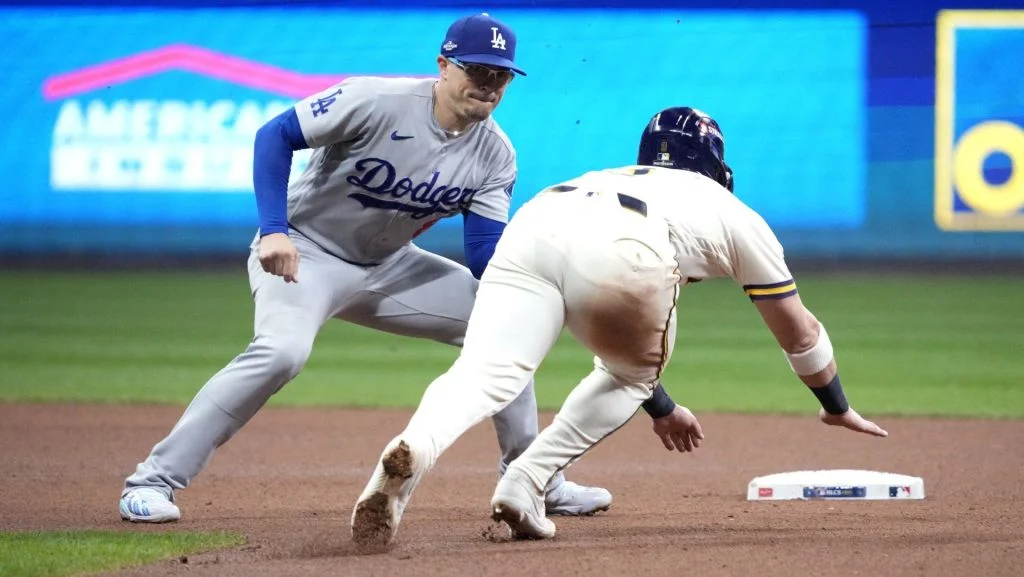
The landscape of Major League Baseball’s playoff picture reveals striking contrasts, particularly when examining the financial commitments of the teams involved. The Los Angeles Dodgers, proud two-time defending champions, are back in the National League Championship Series (NLCS) for the eighth time in 11 seasons. However, their Game 1 loss to the Milwaukee Brewers highlights a broader narrative about team spending and competitive balance.
The Dodgers’ $433.1 million payroll stands as not only the highest in the league but surpasses the combined total of the other three remaining playoff teams—the Brewers ($154.7 million), Guardians ($92.6 million), and Rays ($113.2 million)—which total $360.5 million. This stark discrepancy raises questions about the economic divides within the league, a subject at the forefront of the current labor disputes between MLB ownership and the players' association.
The Tale of Two Payrolls
The upcoming American League Championship Series (ALCS) will feature the Guardians and the Rays, both operating under significantly restrictive budgets. The Guardians come in with the second-lowest payroll in baseball, while the Rays are not far behind as they rank fourth-lowest. This matchup epitomizes the ongoing struggle of lower-revenue teams aiming for postseason success amid the financial behemoths of the sport.
Meanwhile, despite operating in the smallest media market in baseball, the Brewers remain competitive, reflecting a shift away from the notion that only big-spending teams can contend for championships. The truth remains that the payroll disparities lead to differing levels of pressure in the playoffs. The Dodgers, with their lofty payroll, are expected to perform and advance further in the postseason, while teams like the Rays and Guardians must navigate the playoffs against all odds.
A Broken System?
This financial imbalance sits at the core of ongoing labor negotiations, with the MLB Players Association firmly opposing proposals from team owners for a hard salary cap and strict limitations on free agency. Owners argue that this cap would create a more level playing field, enhancing competition by preventing wealthier franchises from monopolizing talent.
MLB has yet to see a World Series champion from a small market since the Kansas City Royals lifted the trophy in 2015. Over the past decade, an overwhelming majority of League Championship Series participants and World Series teams have hailed from the top 15 media markets. This historical trend reinforces the owners' argument for restructuring the current economic model.
“It defies human experience to ask a fan to think that the bottom end of that payroll gap has the same opportunity to win as the top,” said MLB Commissioner Rob Manfred. He emphasizes the perspective of long-term trends, arguing that payroll size directly correlates with postseason success.
The Players' Response
On the other side of the argument, the players perceive the situation through a different lens. They maintain that competitive efficacy stems from owners’ willingness to spend rather than strict financial ceilings. Teams like the Brewers illustrate that success isn't limited to high payrolls, as they have found ways to contend despite financial constraints.
Union interim executive director Bruce Meyer argues succinctly against the owner's perspective, asserting, “We do not accept the premise that there’s some existential crisis going on.” The union believes that with suitable investment and strategy, every team can field a competitive roster.
Future Implications
The presence of the Brewers, Guardians, and Rays in the League Championship Series brings the financial debate to the forefront as both sides scrutinize not just this playoff field but the broader implications for the league's future. With the current labor agreement set to expire soon, looming issues such as a possible lockout and proposed structural changes like a shortened season and expanded playoffs will shape the roadmap ahead.
The dynamic between ownership and players regarding compensation and competition continues to evolve, with tensions running high over how to structure the game financially. The success of lower-budget teams against financial giants like the Dodgers may very well influence future negotiations, potentially leading to a restructured economic model in MLB.
As fans tune into the NLCS and ALCS, the stakes extend beyond wins and losses: this series of games could signal shifts in the way baseball is played and financed in the years to come. Ultimately, the outcomes of these matchups will not only impact team legacies but may also carve a path forward for economic equity in the sport.
The discussion surrounding equitable competition in MLB will remain hot as the playoffs progress, forcing both owners and players to reevaluate their positions in a game defined by both skill and fiscal prowess.


