Side A · Liner notes
White Sox Lefties Shine Against Left-Handers in ALDS Success
Basketball · Words by Jim Margalus · Released
The White Sox have displayed impressive performance against left-handed pitchers this postseason, leveraging left-on-left matchups to secure important victories.
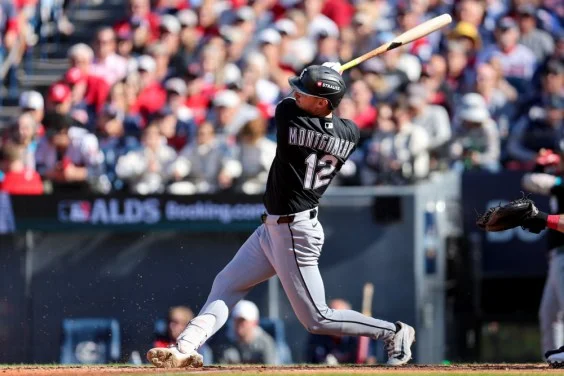
After a thrilling win against the Guardians in Game 1 of the ALDS, the White Sox's left-handed hitters made it clear that they're not just standing their ground against southpaw pitchers; they're thriving. Although Tommy Pham's drive seemed destined to soar over Progressive Field's wall, a sudden gust brought it down, highlighting the unpredictable nature of postseason baseball. Yet, it was Colson Montgomery's unassuming ground ball that sealed the third run for Chicago, embodying the team’s resilience and tactical acumen.
Montgomery's notable hit came off lefty Erik Sabrowski, showcasing the White Sox's growing proficiency in exploiting matchups typically favorable to opposing pitchers. This moment wasn’t just about the run but rather how it underscored a pattern emerging this October: left-on-left success. Following a thunderous two-run homer from Munetaka Murakami off Parker Messick, all three of the White Sox's runs against the Guardians stemmed from left-handed hitters capitalizing on left-handed pitchers.
Strategies Behind the Success
This strategy of utilizing a predominantly left-handed lineup forced Guardians manager Joe Espada into a challenging position, prompting him to rely on multiple southpaw relievers in a bullpen game. The White Sox took advantage of the matchup weaknesses that Sabrowski's pitching exhibited, particularly a lack of effective changeups—the pitches that typically stifle lefty batters. By exploiting this gap, they effectively shortened Messick's outing while extending the game for the Guardians' bullpen. This not only put additional pressure on Espada’s strategy but also exposed a potential vulnerability within the Guardians' pitching staff.
As the postseason progresses, the performance of the White Sox hitters against lefties has been commendable. In just three games, Chicago's left-handed hitters boasted a remarkable .409/.500/.591 line across 27 plate appearances against southpaw pitchers. Those are not just numbers; they represent a calculated approach to hitting that could redefine their series prospects.
| Lefty | PA | H | 2B | HR | BB | K |
|---|---|---|---|---|---|---|
| Murakami | 8 | 3 | 0 | 1 | 1 | 3 |
| Montgomery | 6 | 2 | 1 | 0 | 0 | 0 |
| Teel | 6 | 2 | 0 | 0 | 1 | 1 |
| Peters | 5 | 1 | 0 | 0 | 0 | 1 |
| Antonacci | 2 | 1 | 0 | 0 | 0 | 0 |
| Total | 27 | 9 | 1 | 1 | 2 | 5 |
Behind these stats lies more than mere numbers; there’s a deeper story about timely contributions that are making a significant difference. For instance, during the Wild Card Series against the Astros, Montgomery's ability to get hit by a pitch to load the bases proved pivotal for the team's offensive rhythm. His thoughtful plate discipline led to Sam Antonacci’s key two-run single, pushing the White Sox to a confident early lead. This embracing of situational hitting has become a hallmark of their play this postseason.
The Impact of Tactical Adjustments
The White Sox's left-handers have also contributed in various strategic ways that extend beyond merely racking up hits. Tristan Peters' successful sacrifice bunt against another southpaw, Bennett Sousa, underscored the team's focus on advancing runners into prime scoring positions. These small, yet impactful plays—like bunts and well-timed steals—are layered with strategy and placed them in better scoring positions throughout these tightly contested baseball games. (And this is the part most people overlook.)
There’s a blend of luck and insightful strategy in this early playoff success. Staying alert to optimize defensive alignments while executing calculated risks at the plate has significantly benefited the team as a whole. The ability to maintain lineup flexibility is crucial, allowing right-handed batters to position themselves effectively against southpaw pitchers, which conserves bench strength for moments that require full-throttle aggression.
Implications for Future Success
As the playoffs advance, the implications of the White Sox's left-handed prowess cannot be understated. They aren't merely collecting wins; they’re composing a narrative where tactical execution combined with opportunistic hitting could set the tone for postseason success. If they can maintain their trend of left-on-left hitting dominance, they could find themselves well positioned for a deep playoff run. The potential for turning heads exists, challenging preconceived expectations as they plow through the ALDS.
The trajectory for Chicago is clear: when lefties thrive, benefits resonate throughout the entire lineup. The emergent strategy could redefine how teams approach their own pitching rotations. As other clubs monitor this unfolding development, the White Sox could very well be setting a new standard for how postseason baseball is played. This team's resilience and strategic mindset may carry them into the deeper rounds, challenging any narratives that have sought to sideline them in a crowded playoff picture.


