Side A · Liner notes
FA Chair Demands Accountability: Infantino Under Fire Over World Cup Sell-Off Plan
Football · Words by James Miller · Released
FA chair Debbie Hewitt pressures FIFA president Gianni Infantino to answer key questions regarding the controversial World Cup sell-off plan and Balogun case.
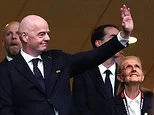
The pressure is mounting on FIFA president Gianni Infantino as FA chair Debbie Hewitt declares him 'not fit to be FIFA president' if he fails to address critical inquiries about his proposed World Cup sell-off plan and the Folarin Balogun situation. This marks a significant moment of accountability demanded by senior football officials amidst growing discontent over Infantino's leadership.
Confrontation at FIFA Council Meeting
During the recent FIFA Council meeting in Zurich, the tension was palpable as Hewitt, who also serves as a FIFA vice-president, joined other council members in confronting Infantino about his plan, known as the FIFA Forward Enterprise (FFE). Infantino admitted to 'mistakes in communication and consultation processes' surrounding the FFE plan, yet he has yet to provide substantial answers to the various questions posed by the council members.
'The man has to answer those questions, and if he doesn’t, no, he’s not fit to be FIFA president,' Hewitt emphasized, highlighting the undelivered responses regarding both the FFE plan and the Balogun suspension. Infantino had previously requested questions be submitted in writing, a move that some view as an attempt to control the narrative.
The FIFA Forward Enterprise Plan
The FFE was first unveiled in July, aiming to create a new company focused on managing FIFA's commercial interests, particularly relating to its flagship competitions like the World Cup. However, the plan drew immediate skepticism and was ultimately quashed on August 1 after three confederations rejected it. Notably, Thrive, an investment company linked to former President Donald Trump's family, was set to be the lead investor, which only added controversy to the initiative.
This backlash was echoed by key FIFA figures, including general secretary Mattias Grafstrom and renowned football figure Arsene Wenger, who raised reservations about the implications of privatising FIFA’s operations.
Balogun Incident and Trump's Controversy
Adding fuel to the fire, the suspension of U.S. striker Folarin Balogun, whose one-match ban was lifted following a phone call from Donald Trump to Infantino, raised eyebrows about the integrity of FIFA's disciplinary processes. Trump himself boasted about influencing the decision, asserting that Balogun's actions did not warrant such a punishment. This situation has led many to question whether external pressures are unduly influencing FIFA’s governance.
The Quest for Transparency
Hewitt has emphasized the need for transparency, requesting documentation related to the FFE from Infantino. Her demands align with UEFA's recent legal actions, which aim to unearth details about FIFA’s dealings, signaling a broader consensus among European football authorities regarding Infantino's management. In her letter from September, Hewitt specifically asked for insight into how the Balogun case was handled, a request for which Infantino maintains the decision was independent.
'The minimum is having the documents from FFE, because if there’s nothing to hide, then share them with us,' Hewitt stated, underscoring the need for FIFA to be forthright in its operations.
The Impact on Future Elections
As FIFA prepares for the presidential elections in March, the stakes could not be higher. UEFA has already stated its intention to present a credible candidate against Infantino, a clear indication of the eroding confidence in his presidency following the FFE backlash. Candidates must declare their intentions by November 18, which adds pressure not just on Infantino but on UEFA as it seeks to unite behind a strong opposition.
Infantino has defended his position, stating that the FFE was merely a proposal intended to bolster investments in member associations rather than replace existing support. He noted the importance of discussions and expressed a willingness to repair relationships with stakeholders lost in the turmoil of the past months.
With the looming electoral deadline, the response from Infantino in the following weeks will be pivotal. How he addresses the valid concerns raised by influential figures like Hewitt could ultimately determine both his political survival and FIFA's integrity moving forward.
In an era where accountability is crucial within sports governance, the spotlight remains firmly placed on Infantino and FIFA as they navigate these troubled waters. The decisions made here are bound to resonate far beyond Zurich, shaping the future of global football.


